On Wednesday, 14th of September the European Commission published a proposal for a Council regulation containing temporary measures reforming EU energy markets. The initiative is in response to record-breaking gas and electricity prices. The proposal came out on the same day as the annual State of the Union speech by the President of the European Commission (currently Ursula von der Leyen), in which the head of the Commission also focused on Russian aggression and the resulting energy crisis.
As expected, the proposal included additional taxation of certain electricity and fossil fuel producers, as well as obligations for member states to reduce electricity consumption. At the same time, what was not included in the proposal is also important – namely, the European Commission left out of the proposal, at least initially, to establish a price cap for natural gas. In the following post, we’ll introduce the proposal in more detail.
Revenue Cap for Electricity Producers
The proposal sets a so-called revenue cap for electricity producers with lower production costs. In the proposal, the amount of the revenue cap is 180 euros per MWh produced. According to the Commission, such a cap significantly exceeds the average of peak electricity prices before the outbreak of the war in Ukraine, and thus the introduction of the cap should not breach the expectations of producers. In case the sales price exceeds the cap (regardless of whether the price is received through bilateral transactions or on the market), the sum exceeding the cap will be collected by Member States, who in turn must use it to support the final consumers.
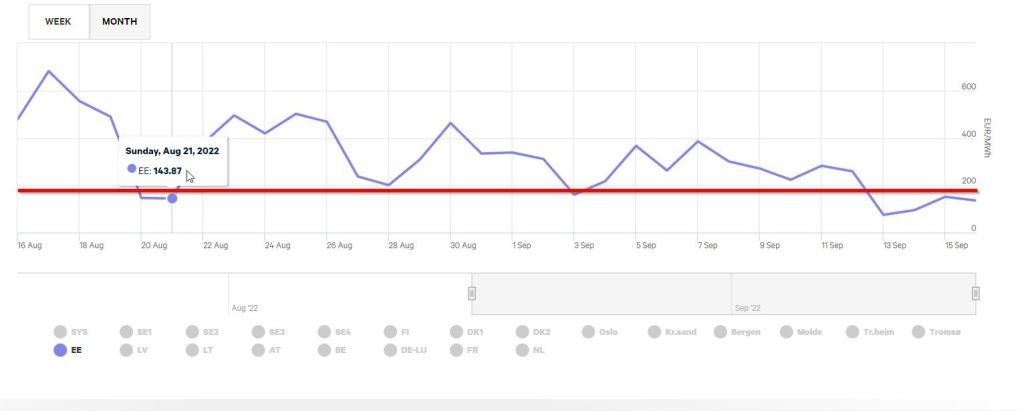
The proposal leaves it up to the Member States to decide when to tax the revenue (either during or after the transaction) as well as how to support final consumers. Regarding the latter, the regulation contains an indicative list of measures that could be implemented, which includes providing support to final consumers for reducing energy consumption, compensating electricity sellers for the lower price they offer to final consumers, promoting investments made by final consumers in the production of renewable energy, etc.
The electricity production to which the revenue cap would apply to is defined by the fuel used, which includes renewable sources (wind, solar, geothermal, biomass), waste, nuclear fuel, lignite, as well as crude oil and petroleum products. Electricity produced from natural gas and coal (the latter also previously imported to a large degree from Russia), on the other hand, would be exempt from the revenue cap. Member states have the option not to apply the revenue cap to small producers with a maximum production capacity of 20 kW – in practice, this primarily means excluding solar panels installed by private consumers.
Interestingly, oil shale is left out of the list. Given that this type of fuel is essentially only used in Estonia, it is possible that in the first version of the regulation the Commission simply missed it, and the final regulation would establish a revenue cap for electricity producers using oil shale as well. Otherwise, the implementation of the regulation, at least in the Estonian and Baltic region, could lead to quite significant market distortion. Such distortion could also be avoided through the introduction of national rules, as the new regulation does not preclude the implementation of additional revenue restrictions by Member States (provided that they are proportionate, non-discriminatory and otherwise in accordance with EU law).
Another important detail is that the basis for the revenue cap is the actual income from the sale of electricity. In other words, the revenue cap should not affect those companies that do not benefit from high electricity market prices because they have previously hedged against price fluctuations (e.g., signed a long-term, fixed-price electricity sales contract).
New rules on price-setting by Member States
The regulation would give Member States the opportunity to temporarily expand the price-setting exception also to medium-sized and small companies. Such companies could purchase a maximum of 80% of the highest annual electricity volume in the last five years this way.
In addition, Member States would be allowed to temporarily set the price of electricity for households (as well as small and medium-sized companies, if this option is used) lower than the actual costs of electricity production, provided that all market participants who want to are able to sell electricity to final consumers at this price and the state compensates them for the corresponding price difference.
Solidarity Contribution for Fossil Fuel Producers
In addition to the revenue cap for electricity producers, the new regulation would also provide for additional taxation of the profits of fossil fuel companies and refiners through the so-called solidarity contribution. In essence, it is a one-time additional income tax that should be paid on the taxable profits of the fiscal year starting in 2022). The part of the profit of the corresponding fiscal year that exceeds 120% of the average taxable profits of the companies in the last three fiscal years, starting from 2019, would be subject to taxation. The relevant part of the profit would be taxed at a rate of 33%, which is additional to other taxes that should be paid on the corresponding amounts.
Like the state revenues received from revenue cap, the solidarity contribution should be used for specific purposes. The proposal lists specific measures for which the solidarity contribution should be used, e.g., supporting energy autonomy measures, supporting energy consumers (primarily individual consumers) to cope with high energy prices, etc.
Electricity Saving Requirements
As expected, the proposal also includes measures to reduce electricity consumption. Last week it was still unclear whether the reduction of electricity consumption during peak hours (hours with the most expensive market price) will be voluntary for the Member States or not. With the release of the proposal, it has become clear that the Commission proposes that reduction should be mandatory. Member States should take measures to save at least 5% of electricity consumption during peak hours. It is at the discretion of the Member States to determine the peak hours, but they must cover at least 10% of all hours of the month.
In addition to reducing electricity consumption during peak hours in a mandatory manner, Member States should additionally take measures to reduce monthly electricity consumption by a total of 10% compared to the reference period, which is the winter periods of the last five years (1 November to 31 March).
Conclusion
Bitter disputes are likely to be expected regarding the details and implementation of the proposal, at both the EU and national level. For example, the text of the proposal is not clear to which Member State the electricity producer should pay income exceeding the revenue cap. In terms of reducing electricity use, both in Estonia and in other countries, painful decisions must be made to achieve the relevant savings. Also, in the future, Estonia must resolve whether and under what conditions to extend the price-setting scheme to entrepreneurs, if the EU regulation will provide this option.
The questions about the gas price cap, which has previously caused disputes between Member States, as well as liquidity assistance for electricity producers, have yet not been resolved in the proposal. The Commission continues its work and discussions with the Member States on these issues, continuing to analyse the possibilities of establishing a gas price cap. In addition, there are plans to form a new working group for price negotiations with Norway as the new main gas supplier. As a third important course of action regarding natural gas, the Commission is trying to develop a new gas reference price, which, unlike the TTF index reflecting prices for pipeline-delivered natural gas, would take into account changed gas supply in Europe (primarily the increased LNG share). However, according to experts, the corresponding measure is a long-term solution that will not be ready before the end of this winter season.
 Rohereeglite blogi